
Proven Business Communication Strategies That Make Clients Choose You Over Competitors
You know the feeling. You’ve been on the receiving end of communication disasters, and they sting every time.
The Silent Treatment: You send an urgent email and hear nothing for three days. No acknowledgment, no timeline, no response. You start wondering if you matter to their business at all.
The Vague Directive: Someone tells you to “handle things better” without explaining what “better” means or what went wrong. You feel set up to fail and lose confidence in the relationship.
The Broken Promise: A vendor commits to Friday delivery during Monday’s meeting, then shows up the following Tuesday with no advance warning. You realize you can’t trust them anymore.
Each scenario stings because poor communication feels like disrespect. When someone communicates poorly with you, it damages the relationship and makes you question whether you want to continue working together.
Now flip the script. How does your communication make others feel?
Why Communication Equals Respect 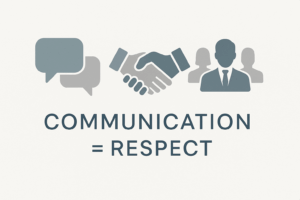
Here’s the truth about business communication: Respect isn’t something you declare. Respect is something you demonstrate through your actions. Communication is where respect lives or dies.
Since you know how it feels to be on the receiving end of poor communication, you understand why getting this right matters for every relationship in your business. Research from Gallup shows that poor communication costs organizations significantly, with only 31% of employees feeling engaged at work partly due to unclear expectations and inadequate communication from leadership.
The business impact is measurable:
- Companies with effective communication practices have 47% higher returns to shareholders
- Teams that communicate well are 25% more productive
- 86% of employees cite lack of collaboration and ineffective communication as the main cause of workplace failures
At HireSmart Virtual Employees, “Respect” stands as one of our SMARTER core values. We define it simply: “Love, protect, and respect others.” This principle guides every interaction our Virtual Employees have with clients, vendors, and colleagues.
5 Proven Strategies for Better Business Communication
Strategy #1: Set Clear Response Time Expectations
Question: How quickly should you respond to business emails?
Answer: Within 2 hours for acknowledgment, 24 hours for full responses.
Silence breeds anxiety. When someone reaches out to you, they need to know you received their message and when they can expect a full response.
We require all HireSmart VEs to acknowledge client requests within two minutes. They don’t need to solve the problem instantly, but they must let the client know they’re on it. This simple practice prevents people from feeling ignored or dismissed.
How to implement client communication response standards:
- Create automatic email acknowledgments for initial contact
- Set team response time goals (2 hours maximum for acknowledgment)
- Use status updates for complex requests requiring more time
- Train staff on professional email response templates
Apply this principle to your business. Create response standards for your team. When someone contacts you, acknowledge receipt immediately. Provide a realistic timeline for your full response. Then meet that timeline. Strong communication habits strengthen all workplace relationships and build the foundation for better team performance.
Strategy #2: Ask Questions to Truly Understand Client Needs 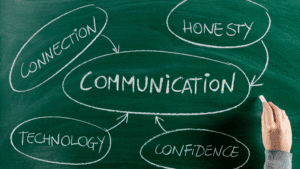
How do you improve client communication understanding?
Listening means more than waiting for your turn to talk. True listening involves asking clarifying questions to ensure you understand what someone actually needs.
Essential clarifying questions for better business communication:
- “Help me understand what success looks like for you on this project.”
- “What’s the most important outcome you’re hoping for?”
- “What would make this solution perfect for your needs?”
- “Are there any concerns or constraints I should know about?”
Before jumping into solutions, ask these questions. They show you care about getting it right, not just getting it done.
When you take time to understand, you avoid the costly mistakes that come from making assumptions. You also show the other person that their needs matter to you.
Strategy #3: Document and Follow Through on Commitments
Why do broken promises destroy business relationships?
Broken promises erode respect faster than almost anything else. When you commit to something, write it down. Create a system for tracking what you’ve promised to whom.
Best practices for tracking business commitments:
- Use shared calendars for deadline visibility
- Implement project management software for team accountability
- Send written confirmation emails after verbal agreements
- Set reminder alerts 24-48 hours before deadlines
- Create backup plans for potential delays
Use simple tools like shared calendars, project management software, or even basic spreadsheets. The tool matters less than the habit of capturing commitments and reviewing them regularly.
If circumstances change and you can’t meet a commitment, communicate that immediately. Explain what happened and propose a new timeline. People can handle bad news much better than they can handle broken promises delivered after the fact.
Strategy #4: Communicate Problems Early, Not Late
When should you tell clients about problems?
Answer: As soon as you discover them, not when deadlines are missed.
Bad news doesn’t age well. When you discover a problem that affects someone else, tell them as soon as possible. Early transparency shows respect. Late revelations show selfishness.
Think about the difference between these two approaches: calling a client on Tuesday to say their Friday delivery might be delayed versus calling them on Friday afternoon to say the delivery won’t happen. The first approach preserves the relationship. The second approach destroys it.
This principle becomes even more critical in remote work relationships, where people can’t read visual cues or pick up on office energy. Regular, proactive communication prevents small issues from becoming relationship-ending disasters. Building engaged teams that care requires this level of transparent, timely communication.
Strategy #5: Tailor Your Communication Style to Each Client
How do you adapt your communication style for different clients?
Respect means acknowledging that different people have varying communication styles. Some clients want detailed reports. Others prefer bullet points. Some like phone calls. Others prefer email.
Communication style adaptation strategies:
- Detail-oriented clients: Provide comprehensive reports with supporting data
- Busy executives: Use bullet points and executive summaries
- Visual learners: Include charts, graphs, and infographics
- Relationship-focused clients: Include personal check-ins and rapport building
- Results-driven clients: Lead with outcomes and metrics
Pay attention to how people communicate with you, then mirror their preferences. If someone sends you brief, direct emails, respond in kind. If they prefer lengthy explanations, provide more context to support their understanding.
This adaptation shows you see people as individuals with unique needs rather than treating everyone the same way. When you adapt your communication style, you demonstrate the respect that builds lasting business relationships and helps lead teams away from dysfunction toward collaborative success.
The HireSmart Communication Standard {#hiresmart-standard}
At HireSmart, we understand that communication standards can’t be left to chance. That’s why every Virtual Employee goes through our comprehensive 40-hour certification program before starting work with clients. During this training, we evaluate not just their technical skills but their communication practices.
Our VEs learn to respond promptly, ask clarifying questions, document agreements, and communicate proactively about potential issues. These aren’t just nice-to-have skills. They’re essential elements of showing respect to the people they serve.
When you hire through HireSmart, you’re getting professionals dedicated to your success, who understand that clear communication is a form of respect. They know that how they communicate reflects on your business and affects your relationships with customers, vendors, and stakeholders.
“Hillary always goes above and beyond with helping with our tasks and often takes on additional projects even outside of her original scope of support,” said one client about their VE. “She communicates so efficiently with our staff, and we are overjoyed to have her as a part of our team!”
Your communication habits shape how others perceive you, your team, and your business. Every email, phone call, and meeting is an opportunity to build respect or tear it down. Make each interaction count.
When you communicate clearly, you show people they matter. When you respond promptly, you demonstrate that their time has value. When you ask good questions, you prove that their success is important to you. When you follow through on commitments, you build trust that leads to lasting business relationships.
Respect isn’t complicated. Clear communication makes it simple.
Frequently Asked Questions
What is the ideal email response time for business communication?
Acknowledge emails within 2 hours and provide full responses within 24 hours during business days. For urgent matters, respond within 30 minutes.
How do you handle difficult client communications?
Listen actively, ask clarifying questions, acknowledge their concerns, and provide clear action steps with timelines. Document all agreements in writing.
What are the signs of poor business communication?
Delayed responses, vague instructions, broken promises, lack of follow-through, and clients expressing frustration or confusion about project status.
How can remote teams improve their communication?
Use video calls for complex discussions, establish clear response time expectations, document decisions in shared platforms, and schedule regular check-ins.
What’s the best way to communicate bad news to clients?
Communicate problems as soon as you discover them, explain what happened, take responsibility, and provide a solution with a realistic timeline.
How do you measure communication effectiveness in business?
Track response times, client satisfaction scores, project completion rates, and the frequency of miscommunications or rework requests.
Ready to explore how HireSmart’s communication-focused approach can strengthen your business relationships? Click here to schedule a free consultation.
About the Author
Anne Lackey is the Co-Founder and CEO of HireSmart Virtual Employees, where she helps businesses scale with full-time, highly trained remote staff. With decades of experience in business operations and systems, Anne is a recognized expert in virtual staffing, process efficiency, and team building.